
1. Introduction
Most of us assume that if the lights come on and the sockets work, our home’s electrics are fine. But that assumption can be dangerously misleading. The box tucked away behind a cupboard or in the hallway wall, often ignored and unlabelled, could in fact be a cranky old fuse board putting your home at risk. In the UK, electrical faults remain a major cause of house fires. In 2024 alone, over 1,140 accidental electrical fires involving everyday white goods were recorded across England. That’s roughly three fires every day.
That’s the kind of wake-up call that makes even a sceptic sit up and think.
This article isn’t about fear mongering or upselling unnecessary upgrades. Instead, it’s a practical guide for homeowners who want to understand when a “working” electrical setup might still be unsafe. And how to spot the obvious warning signs in just 30 seconds. I’ll walk you through what a modern consumer unit really is, why older fuse-boxes often no longer cut it, and give you the knowledge (and the right questions) to decide whether it’s time to call in an electrician.
By the end, if something doesn’t feel right, that hesitation may just save you a lot of trouble (or worse) down the line.
2. What Is a Consumer Unit (CU)? Definition & Purpose
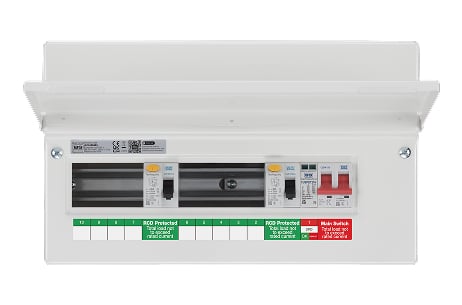
A consumer unit, sometimes called a fuse box or distribution board, is the central control point for all the electrical circuits in your home. If you imagine your electrical system as a series of roads, the consumer unit is the junction where everything meets, gets organised, and is kept safe.
In simple terms, a consumer unit does three key jobs:
1. It Distributes Electricity Around the Home
Power from the electricity meter enters the consumer unit first. From there, it’s split into separate circuits such as:
- sockets
- lighting
- kitchen appliances
- showers
- outdoor power
- EV chargers or heat pumps
Each circuit is independent, which helps prevent faults spreading.
2. It Protects You From Electrical Faults
Inside a modern consumer unit are protective devices like MCBs, RCDs, and RCBOs. These devices automatically cut the power if there’s a fault, whether that’s an overload, a short circuit, or a shock risk.
This protective role is the reason the consumer unit is one of the most important safety components in any UK property.
Electrical Safety First explains that properly functioning RCD protection can reduce the risk of fatal electric shock significantly, and that modern consumer units are designed to shut off dangerous faults in fractions of a second.
3. It Allows Safe Isolation for Maintenance and Repairs
Electricians use the main switch on the consumer unit to safely shut off power when inspecting or repairing part of the installation. Without a proper isolation point, both routine work and emergency interventions become far more risky.
Why This Matters for Homeowners
Many people only think about their consumer unit during a blown fuse or a house move, but its design, age, and condition have a direct impact on household safety. Modern consumer units are built to meet BS 7671, the UK’s wiring standard, and include much stronger protection than older fuse boxes.
If you’re unsure what you have, or whether it’s keeping you as safe as it should, understanding the basics is the first step. Or if you’d prefer a qualified electrician to support, send Sparcford a message.
3. Why Some Consumer Units Get “Outdated”
A consumer unit doesn’t suddenly become unsafe overnight, but it can gradually fall behind modern safety expectations as standards, technology, and household electrical loads evolve. What once met the regulations of its day may no longer provide adequate protection for how we live now.
Here are the main reasons a consumer unit becomes “outdated” in a UK home:
1. Changes in Electrical Safety Standards (BS 7671)
UK wiring regulations are updated regularly to improve safety, reduce fire risks, and address new types of electrical equipment. The latest major update: BS 7671:2018 Amendment 3 (2024), introduced clearer requirements around surge protection, arc-fault detection, and protection for energy-storage systems.
Older consumer units simply weren’t built with these hazards in mind. Even if they work, they may lack the layers of protection now considered normal practice.
2. Lack of RCD / RCBO Protection
The largest gap between old and modern boards is the absence of RCDs (Residual Current Devices) or RCBOs (Residual Current Breaker with Over-Current Protection ).
RCDs are now considered essential because they significantly reduce the risk of electric shock. According to Electrical Safety First, RCD protection can cut fatal shock risk dramatically by disconnecting power in as little as 30 milliseconds, something older fuse boxes cannot do.
If your consumer unit doesn’t have RCD or RCBO protection, it’s automatically considered outdated by today’s standards.
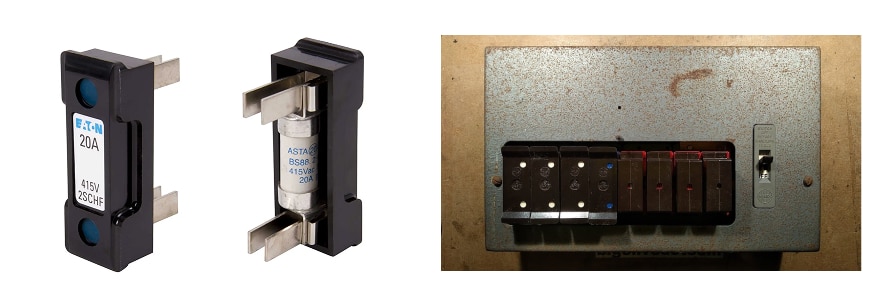
3. Outdated Fuse Technology
Many older homes still use:
- rewireable fuses (BS 3036)
- cartridge fuses
- old MCB-only boards without RCDs
Rewireable fuses, in particular, are now regarded as obsolete. They’re slower to operate, prone to incorrect repairs (wrong fuse wire), and offer far less protection than modern breakers.
4. Increased Electrical Demand in Modern Homes
Twenty or thirty years ago, a household typically didn’t have:
- EV chargers
- heat pumps
- induction hobs
- multiple high-power appliances
- solar PV or battery storage systems
- home offices full of electronics
As demand grows, an old consumer unit may not have enough capacity, spare ways, or appropriate protective devices to handle these loads safely. Overloading becomes more likely, and the installation becomes harder to future proof.
5. Lack of Surge Protection
Modern homes are full of sensitive electronics: computers, smart devices, LED drivers, chargers; which are all vulnerable to voltage spikes.
The 2024 wiring regulation update reinforced when SPDs (Surge Protection Devices) should be fitted. If your consumer unit doesn’t have one (or doesn’t have space for one), it may be considered out of step with current safety guidance.
6. Wear, Corrosion, Heat Damage, or Poor Previous Work
Even a once-compliant board can become unsafe due to:
- loose connections
- overheating or scorch marks
- corrosion, dust, moisture, or pests
- cables that have degraded over time
- badly executed DIY modifications
Physical condition is just as important as age or design.
7. Plastic Enclosures in Certain Locations
Since earlier amendments to BS 7671, metal consumer unit enclosures have been the norm for domestic properties because they reduce fire spread if overheating occurs inside the board.
Plastic consumer units aren’t automatically unsafe, but in many cases, they are considered a legacy design and a sign that the installation is likely older.
In Summary
A consumer unit becomes “outdated” not because it stops working, but because it no longer meets modern expectations for electrical safety and protection. The more years that pass and the more your home’s electrical demands change, the further the gap becomes.
Understanding this helps homeowners make informed decisions instead of relying on the old assumption that “if it works, it’s fine.”
4. Common Alternatives: Fuse Box, MCB Board, Distribution Boards, Temporary Wiring
When homeowners talk about their “fuse box,” “consumer unit,” or “the electrics,” they’re often referring to the same general idea, but these terms don’t always mean the same thing. Understanding the differences helps you recognise whether what you have is modern, ageing, or simply not designed for today’s safety standards.
Here are the most common related concepts and how they compare.
1. Old-Style Fuse Box (Rewireable Fuses)
A fuse box is the predecessor to the modern consumer unit. Many were installed between the 1950s and 1990s and typically contain:
- Rewireable fuses (BS 3036), which rely on a thin piece of wire that melts during a fault.
- Porcelain carriers that must be manually rewired after a fault.
- No RCD protection, meaning shock risk and fire risk are significantly higher.
These units “work,” but they offer nowhere near the level of protection provided by modern circuit breakers. According to Electrical Safety First, installations without RCD protection leave homeowners at much higher risk of serious electric shock.
If your board has little pull out fuse holders with coloured labels, it’s almost certainly an old fuse box.
2. MCB Board (Miniature Circuit Breakers Only)
These boards, common from the late 1980s to mid-2000s, replaced fuses with MCBs, devices that trip during overloads or short circuits. However:
- Many MCB only boards still lack RCD protection, meaning they don’t protect against the most common shock scenarios.
- They often have a single RCD added as a retrofit, which protects all circuits together. Not ideal by today’s standards.
- They typically lack surge protection or capacity for modern loads like EV chargers.
An MCB board is safer than an old fuse box but still behind current expectations.
3. Distribution Boards (DBs)
A distribution board is a broader term used across domestic, commercial, and industrial settings. In homes, a DB and a consumer unit are effectively the same thing. But in larger or commercial systems, DBs may include:
- Three phase supplies
- Sub distribution boards feeding outbuildings
- Specialised protection for machinery
- Higher fault current ratings
For homeowners, the key difference is that the term “distribution board” can imply a more complex setup, not just the main household fuse box.
4. Sub-Boards or Secondary Consumer Units
Some homes have additional boards for:
- loft conversions
- garden offices
- garages
- extensions
- EV chargers
These are not inherently outdated, but they must meet the same safety standards as the main consumer unit. Including RCD/RCBO protection and compliant wiring.
If a sub board looks newer than the main board (or vice versa), the system may have been upgraded in stages.
5. Temporary Wiring Boards
During home renovations, loft builds, or extension work, electricians sometimes install temporary distribution boards. These typically include basic breakers but may:
- lack full RCD/RCBO protection
- be mounted in dusty or damp environments
- have exposed wiring
- not meet the enclosure requirements of a permanent installation
Temporary boards are fine only during active construction and must be removed or upgraded before the work is signed off.
If a homeowner still has a temporary board in place months or years later, that’s a sign the electrical work may never have been properly certified.
Why These Alternatives Matter
Understanding the differences between fuse boxes, MCB boards, consumer units, and temporary setups helps you recognise at a glance:
- whether your system is modern or outdated
- whether it complies with current UK standards (BS 7671)
- whether extra protection devices may be missing
- whether an upgrade may be needed before adding new circuits or appliances
Most importantly, it helps you avoid the common misconception that “all fuse boards are the same.” They’re not, and the level of protection they provide varies dramatically depending on age, design, and compliance.
5. Modern Consumer Units: What They Should Include
A modern consumer unit isn’t just a neatly organised box of switches, it’s a carefully engineered safety system designed to protect people, property, and increasingly complex electrical loads. Under the latest UK wiring regulations (BS 7671:2018 + Amendment 3:2024), new or significantly altered installations must include a range of protective devices that older fuse boxes simply can’t offer.
Here’s what a compliant, up-to-date consumer unit should include today, and why each part matters.
1. Individual Circuit Protection (RCBOs or RCDs + MCBs)
Modern boards are designed so that each circuit has the right kind of protection. The current best practice is:
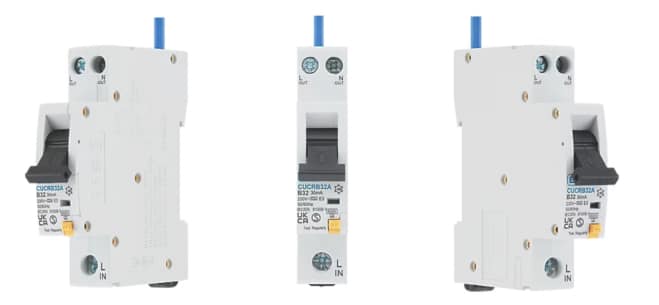
RCBOs (Residual Current Breaker with Overcurrent Protection)
These combine the roles of an MCB and an RCD into one device. They are now widely preferred because:
- each circuit has its own independent shock and overload protection
- one fault won’t shut off the whole house
- they help prevent nuisance tripping
Older boards often group multiple circuits under a single RCD, which is no longer considered ideal.
2. RCD Protection Across Appropriate Circuits
If RCBOs aren’t used, modern consumer units must still include RCD protection that covers circuits such as:
- sockets used by general-purpose equipment
- bathrooms
- outdoor circuits
- buried cables within walls
- lighting circuits in many modern installations
RCDs are one of the biggest safety leaps in UK electrical history because they help prevent fatal electric shocks by disconnecting extremely quickly in dangerous fault conditions.
3. Surge Protection Device (SPD)
Surge protection is now expected in almost all new consumer unit installations unless a formal risk assessment shows otherwise. SPDs protect against voltage spikes caused by:
- lightning-induced surges
- grid switching
- issues with local distribution supplies
- the increasing presence of sensitive electronics
SPDs help protect appliances, smart devices, EV chargers, heat pumps, and solar/battery equipment. As more homes adopt these technologies, SPDs have become a standard part of the board layout.
4. Arc Fault Detection Devices (AFDDs)
AFDDs are not mandatory for every UK home, but the 2024 regulation amendment highlights them as a recommended protective measure in specific scenarios and high-risk circuits.
AFDDs detect dangerous electrical arcing caused by:
- loose or damaged cables
- crushed or overheated wiring
- ageing insulation
These are faults that traditional MCBs or RCDs can’t always detect. AFDDs are especially relevant in circuits serving:
- bedrooms
- living rooms
- older properties
- properties with concealed or inaccessible wiring
While not required in every installation, many modern boards are designed to accommodate them.
5. A Non-Combustible (Metal) Enclosure
Since earlier changes to BS 7671, metal consumer units have replaced plastic ones as standard. This reduces the risk of a fire spreading if overheating occurs inside the enclosure.
Modern metal boards must include:
- corrective grommets for cable entry
- proper earthing of the metal case
- no visible holes where fire could escape
Plastic boards aren’t illegal, but they are now regarded as outdated for new installations.
6. Adequate Space and a Clear, Logical Circuit Layout
A modern consumer unit should be designed with future expansion in mind, with space for:
- additional circuits
- an EV charger
- a heat pump
- garden building supplies
- solar PV or battery storage circuits
A cramped, fully populated board can signal an older or insufficient installation.
7. Proper Labelling and Documentation
A compliant modern consumer unit must include:
- clearly labelled circuits
- a schedule showing what each breaker controls
- RCD test instructions
- SPD/AFFD indicators where applicable
- accompanying electrical certification (EIC) when installed or altered
Unreadable, missing, or handwritten labels often indicate older installations or poorly executed work.
8. Main Switch and Safe Isolation Points
Every modern unit must include a reliable main isolator that allows a qualified electrician to safely work on the system. In many newer installations, the main switch may also incorporate surge or fault protection features.
Why These Features Matter
Today’s consumer units aren’t just better organised, they’re built to address modern risks that older fuse boxes simply weren’t designed for. As UK homes adopt more high-load and electronically sensitive equipment, compliant protection is now essential.
A modern, well designed consumer unit provides:
- stronger shock protection
- improved fire safety
- better resilience against surges
- future-proofing for EVs, heat pumps, and smart devices
If your current board lacks several of these features, it’s a strong sign that it may be outdated, even if everything “seems to work fine.”
6. 30-Second Checklist: How a Homeowner Can Spot an Outdated Consumer Unit
You don’t need to be an electrician to spot the obvious signs that a consumer unit is ageing, unsafe, or behind modern standards. While a full inspection must be done by a qualified professional, a quick visual check can help you understand whether your board likely needs attention.
Here’s a simple 30-second checklist anyone can use.
1. Is the front cover plastic?
Most modern consumer units have metal enclosures, which help contain fire and meet current safety expectations.
A plastic front often indicates an older design, typically installed before mid-2010s.
Note: Plastic isn’t automatically unsafe, but it is a strong clue that the board may lack modern protective devices.
2. Do you see rewireable fuses?
If you spot:
- coloured carriers,
- fuse wire, or
- porcelain-looking fittings,
- little pull-out carrier
…this is an old-style fuse box and is considered outdated by today’s standards. Modern boards use switches, not fuse wire.
3. Are there no RCD test buttons?
Look for buttons labelled “T” or “Test.”
If you can’t find any, your consumer unit may lack RCD protection, one of the most important modern safety requirements.
No RCD = a high likelihood the board is outdated.
4. Is everything on one large RCD?
If you see one or two big switches with test buttons and several circuits underneath each, it means multiple circuits share the same RCD.
While not always unsafe, this setup is older and less ideal. Modern boards often use RCBOs, giving each circuit individual protection.
5. Are there scorch marks, discolouration, or a smell of heat?
Signs to look for:
- brown or black marks
- melted plastic
- heat damage
- cracks around breakers
These are warning indicators and should be checked by an electrician as soon as possible.
6. Is the board full to the brim?
A board with no spare ways or overcrowded wiring may be too small for modern loads. This can make adding new circuits, like for EV chargers, outdoor power, or a heat pump, difficult or unsafe.
7. Are the circuit labels missing or handwritten?
A modern, compliant installation should have:
- clear printed labels
- a circuit schedule
- a tidy layout
Messy or missing labels often indicate an older board or past DIY alterations.
8. Is the consumer unit more than 20 years old?
Age isn’t the only factor, but most consumer units from the early 2000s or before lack surge protection, modern RCD arrangements, and metal enclosures.
If you know your unit hasn’t been updated since you moved in, or in decades, it’s worth a professional assessment.
9. Has it ever been inspected?
If you’ve never had an EICR (Electrical Installation Condition Report), or the last one was more than 5–10 years ago, your consumer unit may not meet current safety expectations.
Use This Checklist as a Guide, not a Diagnosis
These quick checks help homeowners recognise the obvious signs of ageing or outdated equipment. They won’t tell you whether your consumer unit is compliant, that requires testing and inspection by a qualified electrician.
But if your board ticks several of the boxes above, it’s a strong indication that it may need upgrading or, at the very least, a professional safety check.
It it important to note that consumer units should never be opened where a tool is needed, other than by a non qualified electrician. As with all electrics, if any of the above feels outside of your knowlegde or competitence, get a qualified electrician to help out.
7. Why Upgrading Matters. The Risks & Benefits
Many homeowners hesitate when they hear the words “consumer unit upgrade,” especially if everything in the house seems to be working fine. But a modern board isn’t about convenience, it’s about dramatically improving safety, reducing fire risks, and ensuring your home can cope with today’s electrical demands.
Here’s why upgrading really matters.
1. Improved Protection Against Electric Shock
Older fuse boxes and early MCB-only boards often lack RCD protection, which disconnects power within milliseconds if someone touches a live part or a fault occurs.
Modern consumer units use RCDs or RCBOs, which provide much faster and more reliable shock protection than fuse wire or standalone breakers. This is one of the biggest reasons older boards are considered outdated today.
Why it matters:
RCDs have been shown to significantly reduce the risk of serious or fatal electric shock. Without them, common household faults can go unnoticed until someone gets hurt.
2. Reduced Fire Risk
Electrical faults are still a major cause of domestic fires in the UK. Updated consumer units offer several layers of protection that older boards lack:
- Metal enclosures that help contain internal overheating
- SPDs that limit damaging voltage spikes
- AFDDs (where installed) that detect dangerous arcing faults
- More reliable circuit isolation through modern breakers
Even if your wiring is in good condition, your fuse board might not be able to respond quickly enough to prevent overheating or arcing, two leading causes of electrical fires.
3. Better Safety for Modern Appliances and Tech
Today’s homes contain far more sensitive and high-demand devices than they did 20 or 30 years ago:
- EV chargers
- heat pumps
- induction hobs
- home offices
- gaming PCs
- smart home systems
- solar PV and battery storage
Older consumer units were never designed with these loads in mind. Upgrading ensures the system can support modern equipment safely and consistently.
4. Fewer Nuisance Trips and Easier Fault-Finding
Modern boards, especially those using RCBOs, isolate faults to single circuits, meaning:
- if your dishwasher trips, your lights stay on
- the rest of the house isn’t plunged into darkness
- it’s easier to identify which circuit has the issue
- outages are less disruptive
Older boards often put multiple circuits under a single RCD, which can result in widespread nuisance tripping.
5. Compliance With UK Building Regulations (Part P)
Any significant new electrical work, extensions, EV chargers, kitchen refits, outdoor supplies, must comply with current regulations. If your consumer unit can’t support the protective devices required today, you may be unable to:
- add new circuits
- install renewable energy systems
- fit an EV charger
- legally certify new work
An outdated board can hold back future improvements.
6. Insurance and Home Sale Considerations
Some insurers now expect RCD protection and may raise questions if a claim involves outdated electrical equipment. While having an older board isn’t illegal, a modern system reduces the chance of disputes.
Similarly, property surveys often flag old fuse boxes as safety concerns, delaying sales or triggering requests for upgrades.
7. Peace of Mind
Perhaps the simplest but most meaningful benefit: knowing your home is protected by the latest safety technology.
Many homeowners upgrade after their first proper look inside their fuse board. Seeing brittle wiring, crowded circuits, or the absence of RCDs can be a powerful motivator.
When an Upgrade Becomes Essential
You should strongly consider upgrading if:
- you have rewireable fuses
- your consumer unit has no RCD protection
- the board is visibly damaged or overheating
- you’re planning major electrical work
- the board is more than 20–25 years old
- your electrician flags safety issues during an EICR
In Summary
Upgrading isn’t about bringing things “up to date” for the sake of it, it’s about ensuring your home has the same level of protection the UK wiring regulations expect today.
The difference between an old fuse box and a modern consumer unit isn’t subtle, it can be the difference between a minor inconvenience and a life-threatening incident.
8. Common Misconceptions & Criticisms
When homeowners hear that their consumer unit might be “outdated,” it’s natural to feel sceptical. After all, if everything appears to be working, why worry? This section tackles the most common misconceptions and criticisms, and explains why they can be misleading.
1. “If everything works, it must be safe.”
This is the single biggest misconception. Electrical systems don’t show their age the way cars or appliances do. A circuit can work while offering very little real protection.
For example:
- Fuse boxes may only disconnect during a severe fault.
- Older MCBs may react too slowly to prevent shocks.
- Boards without RCDs leave you vulnerable to faults that only modern devices can detect.
- “Working” simply means power is flowing, not that the system is keeping you safe.
2. “Electricians just say it’s outdated to upsell a new board.”
There are companies that oversell upgrades, and that understandably leads to mistrust. However, in most cases, an electrician recommends a new consumer unit because:
- it lacks RCD or RCBO protection
- rewireable fuses are in use
- the board is damaged or overloaded
- modern safety devices cannot be added
- there’s no capacity for new circuits (e.g., EV charger, heat pump)
If in doubt, getting two or three quotes is the best way to distinguish a genuine recommendation from unnecessary work.
3. “Plastic consumer units are illegal now.”
Plastic units are not illegal, but new installations now require metal enclosures for improved fire containment.
So while your plastic board isn’t breaking the law, it’s a clear indicator that the installation is older, and likely missing other protective technologies introduced since the mid-2010s.
4. “You must replace your consumer unit based on age alone.”
Age is a clue, not a diagnosis. A 25-year-old board might still pass certain safety checks, though it will almost certainly lack SPDs, modern RCD arrangements, and capacity for today’s loads.
What matters is a combination of:
- device types
- protective features
- physical condition
- compliance with current standards
- ability to support new work
Think of it like a car: the MOT matters more than the mileage.
. “I can just add a plug-in RCD instead of upgrading.”
Plug-in RCD adaptors add some protection to individual appliances, but they:
- don’t protect fixed wiring
- won’t safeguard lighting circuits
- won’t help if the fault occurs elsewhere on the system
- can’t replace SPDs, AFDDs, or proper shock/overload protection
They’re a short-term safety measure, not a substitute for a compliant consumer unit.
6. “My board passed an EICR once, so it’s fine forever.”
An EICR is a snapshot of safety at a point in time. It doesn’t guarantee that:
- protective devices haven’t degraded
- heat damage hasn’t developed
- new household loads won’t exceed capacity
- changes in regulations haven’t introduced new requirements
Most domestic properties should have an EICR every 5 to 10 years, or when ownership changes.
7. “Modern boards are overkill. My house doesn’t need all that.”
This criticism is common in older properties or among homeowners who haven’t added many devices. But modern safety devices were introduced because:
- older methods failed to catch certain dangerous faults
- homes have many more electronic devices than they used to
- new technologies (EV chargers, solar, heat pumps) demand better protection
- fire brigades and risk assessors highlighted gaps in older systems
Upgrades aren’t about over-engineering, they’re about closing known safety gaps.
8. “A cheaper board is just as good as a premium one.”
Not always. While budget consumer units can be fully compliant, quality differs in:
- device reliability
- build strength
- ease of maintenance
- long-term availability of replacement breakers
- ability to future-proof circuits
A mid-range board from a reputable manufacturer often offers the best balance of safety, reliability, and longevity.
In Summary
Misconceptions often arise from the fact that electrical systems are hidden, technical, and appear to function even when lacking key safety measures. By understanding what your consumer unit should do, and why outdated designs fall short, you can make informed decisions without being swayed by myths, fears, or half-truths.
9. How to Choose a Qualified Electrician
Choosing the right electrician doesn’t have to be overwhelming. The key is knowing what qualifications to look for, what questions to ask, and what level of communication and documentation you should expect. A competent, registered electrician will explain things clearly, provide transparent pricing, carry out full testing, and help future-proof your installation rather than simply swapping parts. Below is a quick overview, but if you’d like a deeper breakdown of each point, you can read the full guide here:
How to Choose a Qualified Electrician.
- Check their qualifications & registration: Look for an electrician registered with a UK Competent Person Scheme (e.g., NICEIC, NAPIT).
- Ask about experience: Ensure they regularly upgrade consumer units and stay updated with BS 7671 standards.
- Clarify exactly what’s included: A proper quote should detail board type, RCBOs, SPDs, AFDDs, circuit count, and any remedial work.
- Expect full testing & documentation: This includes an EIC, test results, circuit schedules, and Building Regulations notification.
- Look for clear communication: No jargon, no pressure selling, just simple, honest explanations.
- Ask about future-proofing: Spare ways, EV/heat pump capacity, solar readiness, surge protection, and smart home compatibility.
- Compare value, not just price: The cheapest quote often cuts corners on testing, components, or safety.
- Check reviews & local reputation: Look for consistent feedback on workmanship, tidiness, clarity, and reliability.
To dive deeper into each question, see real examples, and understand how to spot red flags, visit the full guide:
How to Choose a Qualified Electrician — Full Checklist.
10. Typical Scenarios of When an Upgrade Is (Almost) Mandatory.
Not every home needs a brand-new consumer unit immediately, but there are situations where upgrading becomes strongly advisable — or practically unavoidable. In these cases, it’s not about preference or future-proofing; it’s about meeting safety standards, protecting your home, and ensuring new electrical work can be carried out legally and safely.
Here are the typical scenarios where a consumer unit upgrade is very likely needed.
1. When Your Board Has Rewireable Fuses (BS 3036)
If your fuse box still uses rewireable fuses, an upgrade is almost always recommended. These fuses:
- rely on replaceable fuse wire
- provide slow and inconsistent fault protection
- don’t offer shock protection
- are prone to incorrect DIY “repairs”
They were widely installed decades ago and fall far short of modern electrical safety expectations.
2. When There Is No RCD or RCBO Protection
A consumer unit without RCD/RCBO protection is considered outdated under today’s safety guidance. RCDs disconnect the circuit within milliseconds if a dangerous fault occurs — something older boards cannot do.
If an electrician identifies the absence of RCD protection during an inspection, they will almost always recommend upgrading before carrying out further work.
3. When the Consumer Unit Is Visibly Damaged or Overheating
Signs that indicate urgent attention:
- scorch marks
- melted plastic
- a smell of burning
- heat around breakers
- brittle or discoloured insulation
- loose or poorly seated breakers
These are serious safety risks, and the safest option is typically a full replacement.
4. When You’re Adding New Circuits or Major Loads
Modern installations such as:
- EV chargers
- heat pumps
- electric showers
- solar PV systems
- battery storage
- garden offices/outbuildings
- kitchen rewires
…often cannot be safely supported by older boards.
If your consumer unit lacks capacity or the right protection, it may not comply with Part P or BS 7671 when new circuits are added.
Electricians frequently have to upgrade the consumer unit as part of the job.
5. If Your Board Cannot Accommodate SPDs or AFDDs
The 2024 Amendment to BS 7671 reinforces the expectation that almost all new domestic installations should include surge protection, and highlights where arc-fault detection is recommended.
If your board:
- has no space for an SPD
- cannot physically accept new protective devices
- uses outdated breaker formats
…then upgrading becomes necessary to meet modern safety standards.
6. After a Poor or Inconclusive EICR (Electrical Installation Condition Report)
If an electrician performs an EICR and finds:
- C1 (danger present),
- C2 (potentially dangerous), or
- FI (further investigation required)
…relating to the consumer unit, replacement may be the most practical and safest solution.
Typical EICR findings that lead to replacement:
- lack of RCD protection
- overheating or signs of burning
- mixed brands of breakers
- damaged or undersized cables
- missing documentation or labels
7. If You’re Renovating or Extending Your Home
Building control may require certain circuits to be brought up to modern standards. If your current consumer unit:
- is already full
- doesn’t support new protective devices
- doesn’t meet enclosure or capacity requirements
…the electrician may need to install a new one to legally sign off the work.
8. When the Board Is More Than 20–25 Years Old
Age alone isn’t a hard rule, but older units typically:
- lack surge protection
- lack RCBOs
- use outdated breaker designs
- are housed in plastic enclosures
- have limited space for new circuits
- may contain ageing or degraded wiring
After two decades, a board is usually behind several iterations of BS 7671 and may no longer meet modern expectations.
9. When Insurance or a House Survey Highlights Risks
Home insurance providers or surveyors often flag:
- old fuse boxes
- damaged or overloaded boards
- lack of RCD protection
- worn or dangerous wiring
These findings can delay property sales or affect insurance claims.
Upgrading the consumer unit is often the simplest way to resolve the issue.
In Summary
A consumer unit upgrade becomes “almost mandatory” when the existing board cannot deliver the level of protection required by today’s standards — or when it holds back essential electrical work.
If you fall into any of the scenarios above, upgrading isn’t just a nice-to-have; it’s a practical step toward keeping your home safe, compliant, and ready for the demands of modern living.
11. Conclusion
Understanding whether your consumer unit is outdated isn’t about trying to upsell electrical work — it’s about recognising how far modern safety standards have come, and how critical your fuse board is in protecting your home. A system can seem to “work fine” for years while quietly lacking the protection needed to prevent electric shocks, fires, and damage to today’s sensitive electrical equipment.
By now, you’ve learned:
- what a consumer unit does and why it matters
- how modern protection (RCDs, RCBOs, SPDs, AFDDs) differs from older technology
- how to spot the early signs that a board may be outdated
- why some boards simply can’t keep up with today’s demands
- when an upgrade becomes unavoidable
- how to choose an electrician you can trust
If your quick 30-second check raised even a couple of red flags — or if your consumer unit is old enough that you’re unsure when it was last inspected — it’s worth getting professional advice. A qualified electrician can perform a proper assessment, explain your options clearly, and help you decide whether an upgrade is needed.
A consumer unit isn’t just a box of switches. It’s the heart of your home’s electrical safety system. Taking the time to understand it — and keep it up to modern standards — is one of the simplest ways to protect your family, your property, and your peace of mind.
If you’re thinking about having your consumer unit checked, or you’re planning new electrical work in your home, reaching out to a registered electrician is the next logical step. The right advice now could prevent far bigger problems later.
Important Safety Reminder
Electrical work in the UK should only be carried out by people who are properly trained and competent to do it. Working on a consumer unit, or any part of your home’s fixed wiring, is not a DIY task. Incorrect installation can lead to electric shock, fire, and insurance complications, and certain types of work must legally be notified under Part P of the Building Regulations.
If you are not a qualified or appropriately experienced electrician, you should not attempt to repair, alter, or install electrical systems. Always use a registered professional who understands the latest safety standards and has the tools and knowledge to work safely.
Your home’s electrical system is designed to protect you, but only when it’s installed, tested, and maintained by someone who knows exactly what they’re doing.